
What is a metabolic assessment and why does it matter?
Many people reach a frustrating point: they eat less, choose “the right things”, exercise, and yet the results are slow to appear or disappear as quickly as they came. This is where the frequent confusion between diet and metabolism comes from. Although they are often used interchangeably, they don’t mean the same thing and don’t play the same role in weight loss.
A diet is, most of the time, a set of temporary rules. Your metabolism, on the other hand, is the real way your body turns food into energy, how it burns calories, how it adapts to restrictions and how it reacts to change. When these mechanisms are ignored, losing weight becomes an experiment based on assumptions, not on real data.
This is where the idea of a metabolic assessment comes in. Not as a miracle solution or a magic test, but as a “metabolic map” that provides context: where you are, how your body works and which approaches are more suitable before you start a weight-loss programme. Understanding this starting point can make the difference between a sustainable process and yet another cycle of unsuccessful attempts.
What a metabolic assessment is
A metabolic assessment is the process of analysing how your body produces and uses energy. Metabolism doesn’t just mean “how many calories you burn”, but all the reactions through which the body turns food into energy, supports vital functions and adapts to changes such as weight loss, stress or variations in physical activity. That is why we talk about a personal metabolism, which differs from one person to another.
It is important to make clear what a metabolic assessment is NOT. It is not a magic test, nor a promise of quick results. It does not involve a universal formula and cannot be reduced to a single number or indicator. A metabolic assessment is a process of understanding individual energy needs, not an instant solution.
Unlike standard diets or online calorie calculators, which use statistical averages, a metabolic assessment takes into account the person’s real context. Calculators can give general estimates, but they cannot capture metabolic adaptations, weight-loss history or the way the body reacts to restrictions.
With a metabolic assessment, the focus shifts from general rules to data relevant to each individual. This difference explains why two people following the same diet can have completely different results, and why personalisation becomes essential before starting a weight-loss programme.
What a metabolic assessment actually measures
A metabolic assessment looks at more than weight or estimated calorie intake. Its purpose is to give a realistic picture of how the body uses energy, adapts to weight loss and reacts over time to dietary changes. This clarity is essential for making the right decisions and avoiding strategies based on assumptions.
Metabolic rate and real energy expenditure
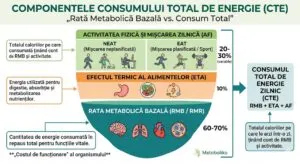
The basal metabolic rate, also called RMR or BMR, is the amount of energy the body uses at rest for vital functions: breathing, circulation, organ activity. In other words, it is the body’s “running cost”. In addition to this, total energy expenditure includes daily movement, physical activity and the digestion of food.
The problem arises when these values are estimated only with standard formulas or online calculators. These tools use statistical averages and take no account of weight-loss history, metabolic adaptations or individual differences. That is why “online calories” can be misleading and can lead to diets that are too restrictive or, on the contrary, ineffective. The concept of energy balance is also explained in detail by institutions such as the National Institute of Diabetes and Digestive and Kidney Diseases, which emphasises the individual nature of energy expenditure.
The body’s response to weight loss
Another element measured indirectly by a metabolic assessment is how the body adapts after weight loss. As weight drops, the body becomes more energy-efficient and may “burn less” for the same activities. This metabolic adaptation is a biological mechanism documented in the specialist literature and explained by sources such as the NIH (National Institutes of Health) and the NCBI (National Center for Biotechnology Information).
In practice, this information helps build a realistic plan that takes maintenance into account, not just the initial weight loss. Some personalised programmes also use foods built into the plan, designed to support the agreed nutritional structure as part of the process, not as an end in themselves.
Why a metabolic assessment matters before losing weight
A metabolic assessment is an essential starting point for anyone who wants stable results, not just temporary weight loss. Without this stage, many weight-loss plans rely on assumptions and general recommendations that may work in the short term but increase the risk of plateaus and relapses. Understanding how your body uses and manages energy fundamentally changes your weight-loss strategy. Analyses published by academic institutions such as Harvard Health show that maintaining weight loss depends on gradual adaptation and monitoring, not on temporary restrictions.
It prevents the wrong restrictions
One of the biggest problems with classic diets is applying restrictions that are too harsh, without taking the body’s real needs into account. A metabolic assessment helps avoid these excesses by giving clear reference points about how much energy your body needs and how. Without them, many people end up drastically cutting their calorie intake, which can trigger metabolic adaptations and hormonal imbalances. The result is well known: rapid weight loss followed by regain, in other words the yo-yo effect. An informed approach reduces this risk from the very beginning.
It reduces plateaus and frustration
Plateaus are one of the most common sources of frustration during weight loss. Without a metabolic assessment, a plateau is often misinterpreted as a lack of effort or discipline. In reality, the body is adapting biologically to the new weight and energy intake. A metabolic assessment gives context to these adaptations and allows smart adjustments before loss of motivation leads to giving up or to extreme measures.
It lays the foundation for maintenance
Losing weight shouldn’t be seen as an end point, but as one stage of a wider process. A metabolic assessment helps build a strategy that takes maintenance into account from the earliest phases. The specialist literature, including analyses published in The Lancet on maintaining weight loss, emphasises that long-term success depends on gradual adaptation and monitoring. With a clear metabolic foundation, maintenance is no longer an experiment, but a natural continuation of the process.
Metabolic assessment vs classic diets
The difference between a metabolic assessment and classic diets is not about “better” or “worse”, but about how the process is built. The two approaches start from different premises and pursue distinct goals, which explains why their long-term results are often opposite.
A generic diet vs a personalised approach
Classic diets use universal rules: the same calorie intake, the same restrictions and the same menus for completely different people. A metabolic assessment starts from the individual and the specific way their body works, establishing real energy and nutritional needs rather than general estimates.
A focus on fast results vs process
The classic diet is aimed almost exclusively at fast weight loss. A metabolic assessment treats weight loss as part of a wider process that includes the body’s adaptation, nutrition education and preparation for maintenance. The focus moves from “how many kilograms” to “how you sustain the result”.
No monitoring vs adjustments
In most diets, the plan stays the same regardless of how the body reacts. An approach based on metabolic assessment involves periodic monitoring and adjustments, depending on progress, plateaus or changes in lifestyle. In this way, the plan evolves with the person, not against them.
This comparison explains why a metabolic assessment is increasingly seen as a sustainable alternative to classic diets.
How a metabolic assessment fits into a personalised process
A metabolic assessment is not an isolated step, but the starting point of a structured process designed to work in the medium and long term. Integrating it properly involves more than setting initial values. It is about building a strategy that evolves with the person, not about applying a fixed plan.
The process begins with the initial assessment, in which the relevant data on metabolism, lifestyle, eating habits and individual context are analysed. The purpose of this stage is to clarify real needs, not to label or impose standard restrictions.
Based on this assessment, the next step is structuring in stages. Each stage has a precise role, from adjusting the diet to stabilising progress. Changes are introduced gradually to allow the body to adapt without major metabolic stress. This is the logic of a personalised metabolic protocol, built on assessment, stages and adjustments, not on universal rules.
An essential element of the process is constant monitoring. Progress is checked periodically and the plan is adjusted according to the body’s real response. In structured programmes, the role of a medical team and monitoring is essential for adapting the plan over time and preventing the plateaus and frustrations common in classic diets.
Finally, continuous adaptation makes the difference between a temporary effort and a sustainable process. The metabolic assessment remains an active tool throughout the programme, supporting both weight loss and the maintenance of results.
Why the starting point matters more than the diet
For many people, losing weight starts with a list of rules or a diet chosen at random. The problem is that, without a clear understanding of how your own body works, this often becomes an experiment. Sometimes it works in the short term; at other times it leads to plateaus, frustration or the yo-yo effect.
The assessment used by Metabolika changes this starting point. It provides a clear foundation, adapted to real needs, on which a coherent process can be built. Instead of generically imposed restrictions, there are stages, adjustments and monitoring, all aimed at maintenance and long-term balance.
Without this foundation, losing weight remains a repeated attempt at quick fixes. With it, it becomes a structured, predictable process that is easier to fit into everyday life.
The next step, taken with full information
If you want to understand what a metabolic rebalancing process built on assessment and adaptation looks like in practice, you can explore the structure of a personalised metabolic protocol, explained step by step.
For those who want to start well informed and find out whether this approach is right for them, an initial consultation can clarify the right direction and the next steps.
Frequently asked questions about metabolic assessment
Is a metabolic assessment a medical test?
A metabolic assessment is not a classic medical test and does not make diagnoses. It is a process of analysing how your body uses energy, responds to food and adapts to change. Depending on the programme, it may include anthropometric data, information about your lifestyle and the interpretation of your metabolic response, without replacing medical investigations.
Can I lose weight without a metabolic assessment?
Yes, it is possible to lose weight without a metabolic assessment. However, without this step, the process often becomes one of “trial and error”. A metabolic assessment helps reduce the risk of unsuitable restrictions, plateaus or the yo-yo effect, providing a clearer starting point that is better adapted to individual needs.
Why doesn’t the same diet work for everyone?
Because metabolism, activity level, weight history and lifestyle differ from one person to another. A diet that works for one person may be ineffective or hard to maintain for someone else. A metabolic assessment explains these differences and shows why universal solutions have unpredictable results.
Does a metabolic assessment help with maintenance?
Yes, one of the most important roles of a metabolic assessment relates to maintenance. Understanding how the body adapts after weight loss allows adjustments to be made in good time, before the weight starts coming back. In this way, maintenance is not left to chance, but is built into the process from the start.
What happens if my metabolism is “slow”?
The term “slow metabolism” is often used loosely. In reality, a metabolic assessment helps identify real energy needs rather than applying labels. If the body uses less energy, the strategy adapts through structure, pace and monitoring, not through extreme restrictions that can make the problem worse.
Does the metabolism change after weight loss?
Yes, the metabolism changes as you lose weight. The body needs less energy at a lower weight, and this adaptation is normal. A metabolic assessment helps anticipate these changes and adjust the plan, to reduce the risk of plateaus or weight regain.
How often should a plan be adjusted?
There is no fixed interval that applies to everyone. Adjustments depend on the rate of progress, the body’s response and changes in everyday life. Periodic monitoring allows flexible adjustments, so that the plan remains effective and sustainable over time, without becoming rigid or frustrating.
Why is monitoring important in a personalised process?
Monitoring turns the metabolic assessment from a static point into an active tool. It makes it possible to observe the body’s real reactions and adapt the strategy when plateaus or changes occur. Without monitoring, even a well-designed plan can become ineffective, because metabolic needs don’t stay the same in the long term.